The Impact of Modern Storage and Drying Facilities in Improving Crop Quality and Market Access
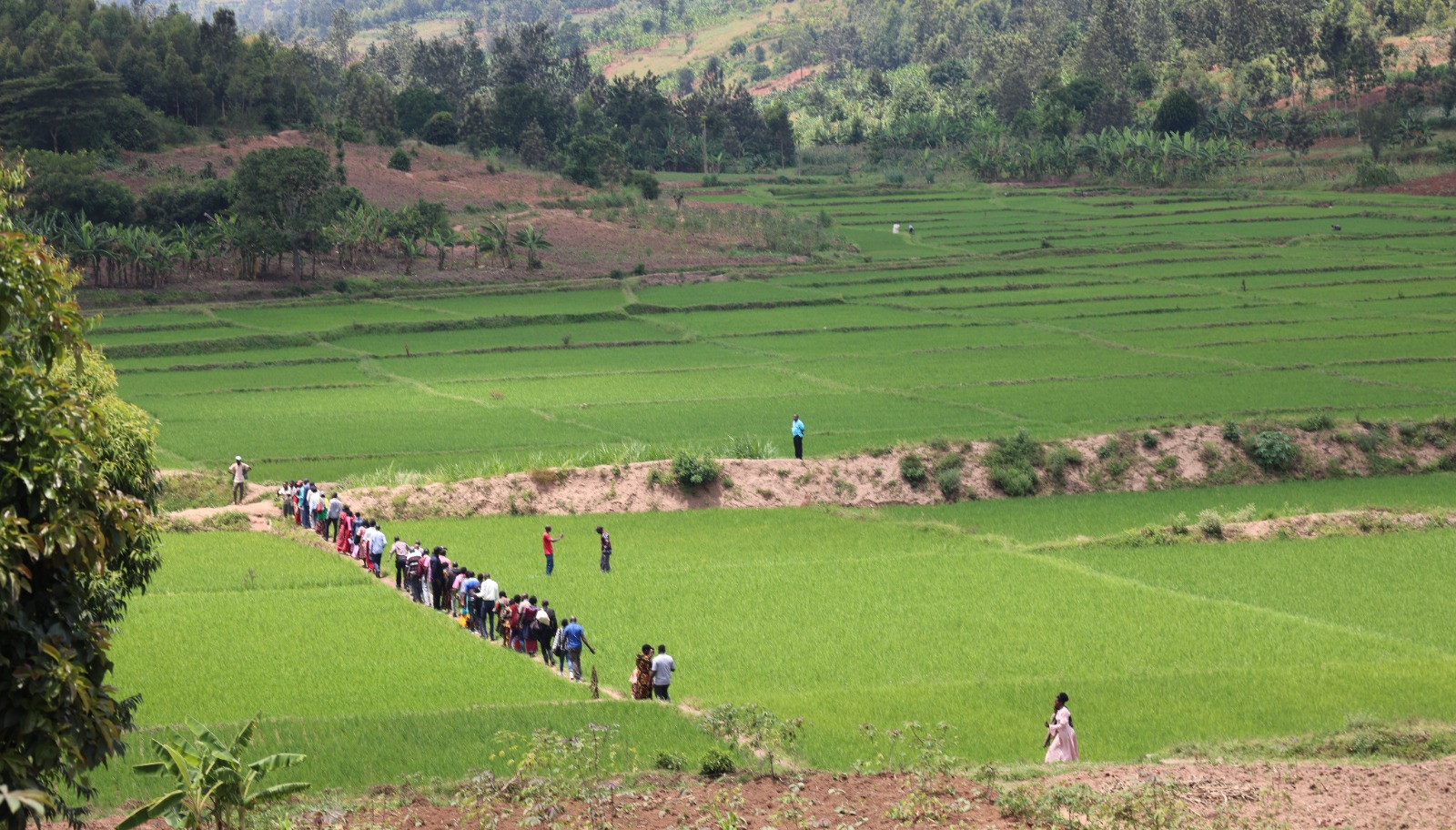
Farmers’ cooperatives producing rice, beans, and maize in Rwanda’s Southern Province have long faced post-harvest challenges, particularly the lack of adequate storage and drying facilities. These constraints often resulted in significant yield losses, poor grain quality, and frequent rejection of produce by buyers due to high moisture levels and aflatoxin contamination. Today, these challenges are being effectively addressed through support from the Commercialization and De-Risking for Agricultural Transformation Project (CDAT), which is providing matching grant support to agribusinesses in Nyanza District to establish modern warehouses and dryers for post-harvest handling and improved market access for local cooperatives and smallholder farmers.
One of the beneficiaries of this support is Delux Be BERA CO LTD, owned by Mr. Claude Ndayisaba, a commodity trader based in Busasamana Sector, Nyanza District. His company aggregates agricultural produce from cooperatives and individual farmers and supplies it to schools, correctional centers, domestic markets, and regional buyers. Through the CDAT matching grant, Mr. Claude was supported in the construction of a modern warehouse with a storage capacity exceeding 6,000 metric tons and the installation of a high-capacity grain dryer. The total investment amounts to RWF 248,892,690, of which RWF 130,000,000 was contributed by CDAT, while the remaining amount was financed by the entrepreneur. The investment aims to reduce post-harvest losses, improve grain quality, and mitigate aflatoxin contamination, a major cause of market rejection and health risks in cereals and legumes value chains.
Before the establishment of the warehouse and the dryer, farmers and cooperatives routinely delivered produce with high moisture content and were often forced to take it back for further drying. At the same time, the entrepreneur relied on rented storage facilities located in different places, many of which were unsafe and inadequate. Crops were frequently stored in poorly ventilated spaces without proper drying platforms, leading to mold growth, spoilage, and aflatoxin contamination. Consequently, some batches of maize and beans were rejected by buyers and returned to farmers. These challenges were worsened during periods of limited sunshine, when natural drying was unreliable, resulting in financial losses for both farmers and traders and reduced buyers’ trust in the quality and safety of locally supplied produce.
The introduction of modern drying and storage infrastructure has significantly improved this situation. Produce is now accepted as it can be properly dried and safely stored on site. Crops are dried to the recommended moisture content level, which is critical for preventing mold growth and aflatoxin contamination. Previously hidden spoilage caused by internal moisture has been effectively eliminated, and the presence of rotten or contaminated grains has declined substantially. As a result, Delux Be BERA CO LTD consistently delivers produce that meets market standards, allowing buyers to specify quality requirements with confidence.
Improved quality assurance has also expanded market opportunities. Mr. Claude no longer faces challenges in securing buyers, as his products meet the standards required by both domestic and regional markets. In addition to serving clients within Rwanda, the company now supplies agricultural produce to neighboring countries, including Tanzania and Uganda. The investment has also generated employment, with Delux Be BERA CO LTD currently employing 40 permanent staff, contributing to local economic development and livelihoods in Nyanza District. This highlights the impact of targeted investment and interventions in general but specifically how the post-harvest handling is critical and availability of modern storage and drying facilities are indispensable in the agriculture value chains and should be attended to.
Under the CDAT post-harvest handling component, a total of 26 projects involving dryers and warehouses have signed grant agreements to receive matching grant support. Of these, 14 projects focus on the installation of dryers, while 12 are dedicated to warehouse construction. To date, seven of the twelve warehouse beneficiaries have already commenced construction works. The warehouses approved under this initiative are designed with standardized capacities of 5,000 tons each storage capacity for warehouses for legumes, while warehouses for tubers have a storage capacity of 500 tons.