Stronger Together: Protecting People, Dogs and Wildlife Around Volcanoes National Park
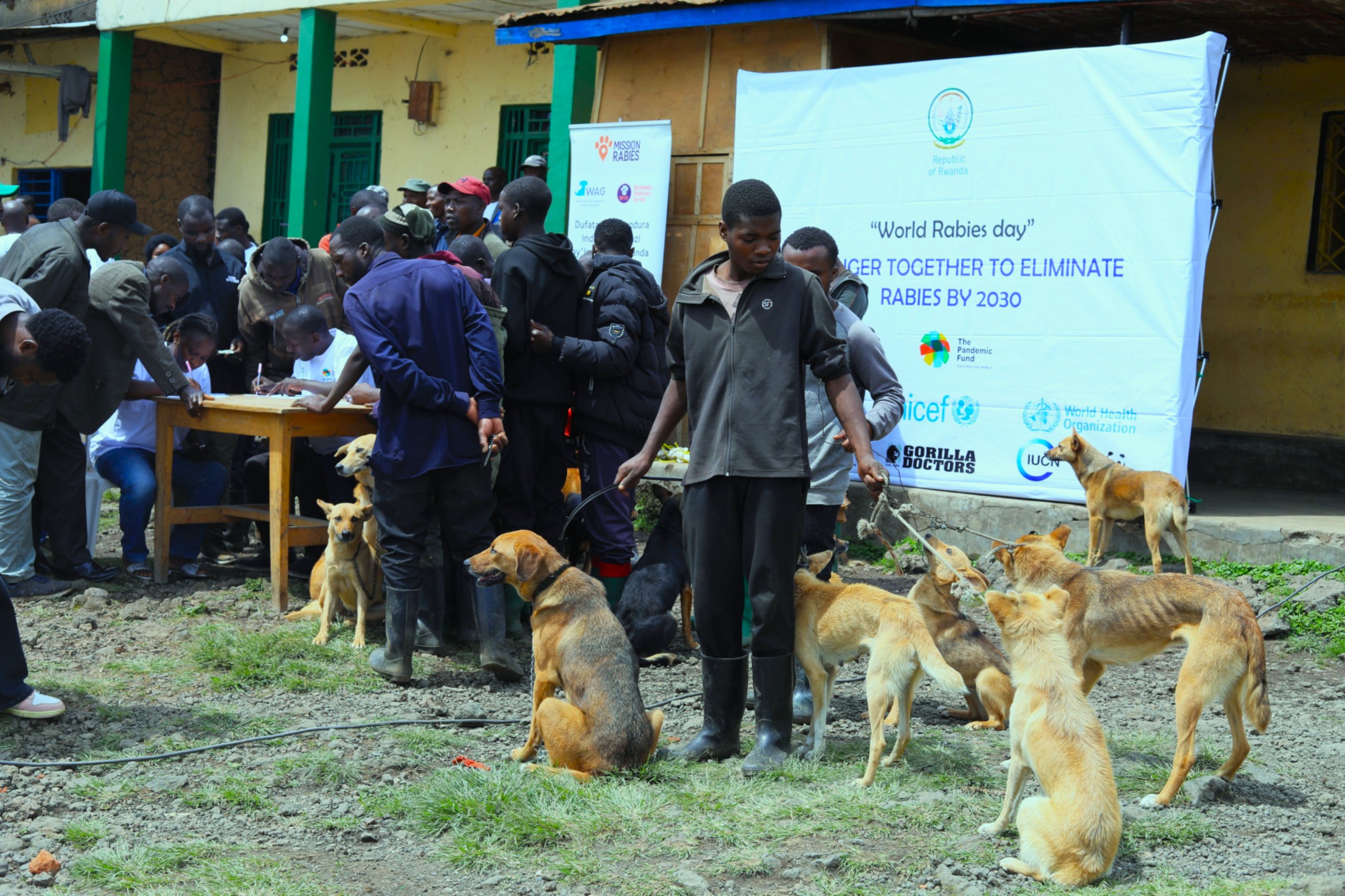
Musanze, Rwanda — 21–28 September 2026 — In communities surrounding Volcanoes National Park, people, livestock and wildlife live in close proximity. That relationship brings economic and environmental benefits, but it can also create pathways for diseases to move between animals and people.
This was the focus of Rwanda Rabies Awareness Week 2026, held from 21 to 28 September under the theme “Stronger Together.” The campaign promoted a One Health approach to preventing rabies and strengthening preparedness for other zoonotic diseases across the Greater Virunga Landscape.
Rabies is almost invariably fatal once clinical symptoms appear, but it is preventable. Dogs account for the vast majority of human rabies transmissions, making dog vaccination, responsible ownership, timely reporting of bites and access to post-exposure treatment central to prevention.
Protecting communities and wildlife
The districts surrounding Volcanoes National Park—Musanze, Rubavu, Nyabihu and Burera—face particular risks because domestic and free-roaming dogs can come into contact with wildlife.
An infected dog entering the park could pose a threat not only to people but also to wildlife, including Rwanda’s endangered mountain gorillas. Preventing rabies in communities around the park is therefore closely linked to wildlife conservation and the protection of the tourism sector.
Musanze hosted the 2026 awareness week after recording 216 dog-bite cases in 2025, placing it among the five districts with the highest number of reported cases nationally, according to the campaign document.
Prevention starts with communities
The week-long campaign combined public awareness, health education, dog vaccination, community engagement and multisectoral dialogue.
Communities were encouraged to vaccinate dogs, prevent them from roaming freely and report animal bites promptly. Early medical attention following a bite or scratch from a potentially infected animal remains critical to preventing rabies deaths.
The campaign also reinforced the importance of collaboration between veterinary and human health services, wildlife authorities, environmental institutions, local governments and communities.
A One Health response
Rabies was the immediate focus, but the campaign addressed a wider range of zoonotic and environmental health risks facing the Greater Virunga Landscape.
Diseases such as Ebola, Marburg virus disease and Rift Valley fever highlight the importance of strong surveillance, community awareness and responsible interactions between people, animals and the environment.
By bringing different sectors together, the One Health approach seeks to strengthen Rwanda’s ability to prevent, detect and respond to these threats.
Protecting a conservation and tourism asset
Volcanoes National Park is home to Rwanda’s mountain gorillas and attracts visitors from around the world. Keeping communities and wildlife healthy is therefore important not only for public health but also for conservation and tourism.
Rwanda’s efforts are aligned with the global “Zero by 30” goal of eliminating human deaths from dog-mediated rabies by 2030.
Achieving that ambition will require sustained dog vaccination, responsible ownership, effective surveillance, timely treatment of bite victims and continued community participation.
Around Volcanoes National Park, the message is simple: protecting human health, animal health and the environment requires everyone to work together.