Rubuyenge–Burakari Marshland Set to Boost Rice Production in Ruhango and Nyanza
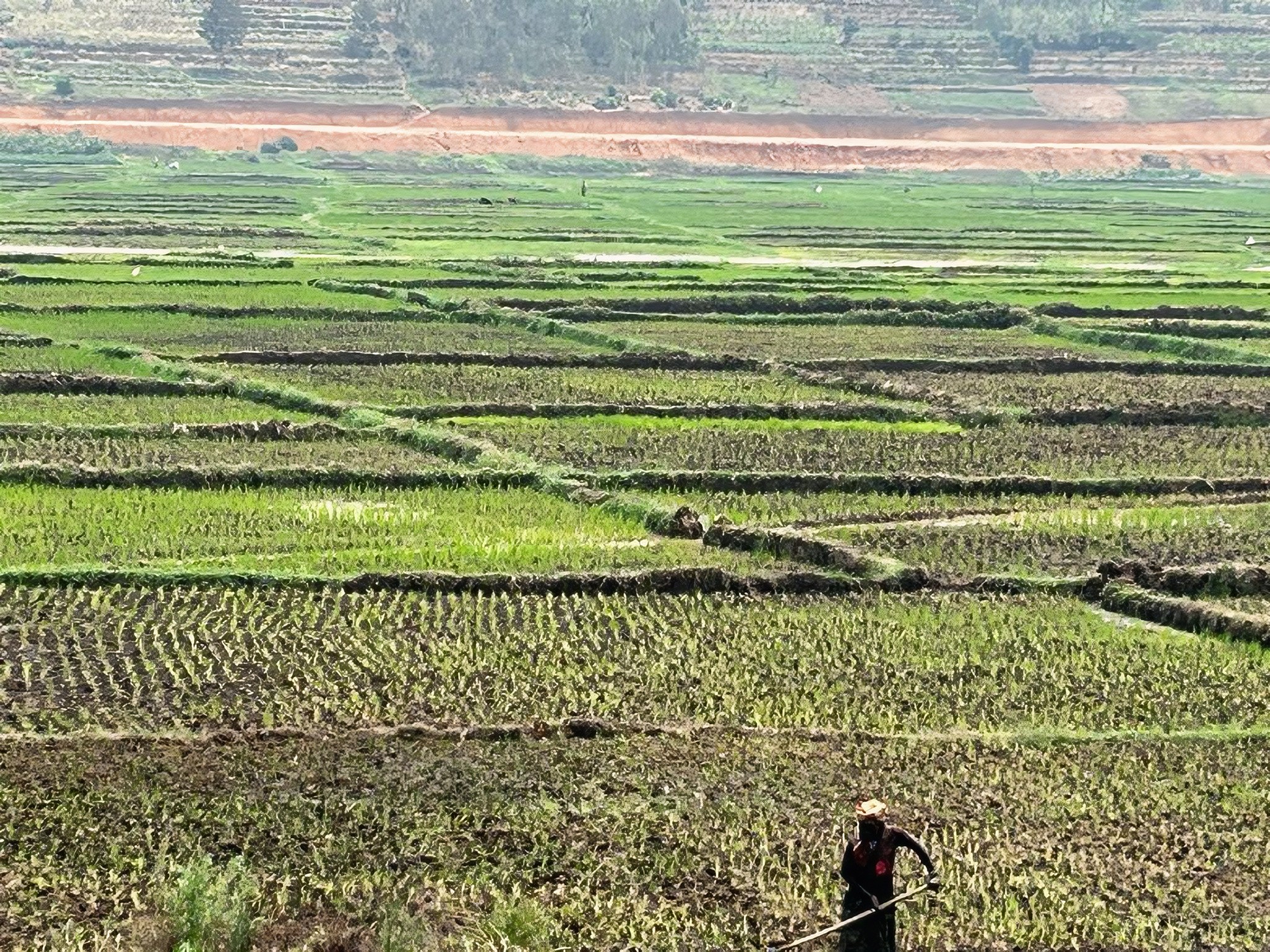
Farmers from COPRORIZ Cooperative in Rubuyenge–Burakari Marshland, located between Ruhango and Nyanza districts in Rwanda’s Southern Province, are witnessing a renewed sense of hope following the launch of a major rehabilitation initiative under the Commercialization and De-Risking for Agricultural Transformation (CDAT) Project.
For years, farmers operating in the Rubuyenge-Burakari 107-hectare marshland struggled with persistent challenges that undermined productivity and income. Heavy flooding frequently washed away rice fields, while soil erosion further reduced yields. The lack of reliable irrigation infrastructure left many farmers unable to irrigate their crops during dry spells, significantly affecting production. In addition, damaged canals, non-operational irrigation systems, poor road access due to flooding, and the absence of post-harvest facilities compounded their losses.
The marshland, managed by COPRORIZ Cooperative at Burakari, brings together 400 members who depend largely on rice cultivation for their livelihoods. Approximately 70 percent of the marshland is dedicated to rice production, while the remaining 30 percent—areas less accessible to irrigation water—is used to grow mixed crops such as tomatoes and eggplants.
In the absence of formal infrastructure, farmers had resorted to improvised solutions, including diverting water from nearby streams to irrigate their fields. However, these temporary measures were neither efficient nor sustainable.
To address these long-standing challenges, the CDAT Project has undertaken comprehensive rehabilitation works in the marshland. The interventions include the rehabilitation of irrigation canals, expansion and reshaping of the main drainage system in Burakari, elevation of the access road crossing the marshland to prevent flood disruptions, and construction of two rice drying grounds. The total investment in these improvements amounts to more than RWF 1.1 billion .
The impact of these improvements is expected to be transformative. With reliable irrigation and improved drainage systems, farmers anticipate increased resilience against flooding and water shortages. Rice yields, which previously averaged 4.5 tons per hectare, are projected to rise to 6.5 tons per hectare. Moreover, the construction of 2 drying grounds will significantly reduce post-harvest losses and improve grain quality, enabling farmers to secure better market prices.
Farmers have expressed optimism about the ongoing works, noting that the rehabilitation will allow them to cultivate their land more efficiently and without constant fear of crop destruction. Improved infrastructure is also expected to enhance access to markets, further strengthening their economic prospects.
The rehabilitation of the Rubuyenge–Burakari Marshland is scheduled for completion in May 2026. Once finalized, the project is expected to significantly boost agricultural productivity, improve household incomes, and contribute to sustainable agricultural transformation in the Southern Province.