RAB, FAO Launch Swine Erysipelas Vaccination Campaign in Rutsiro
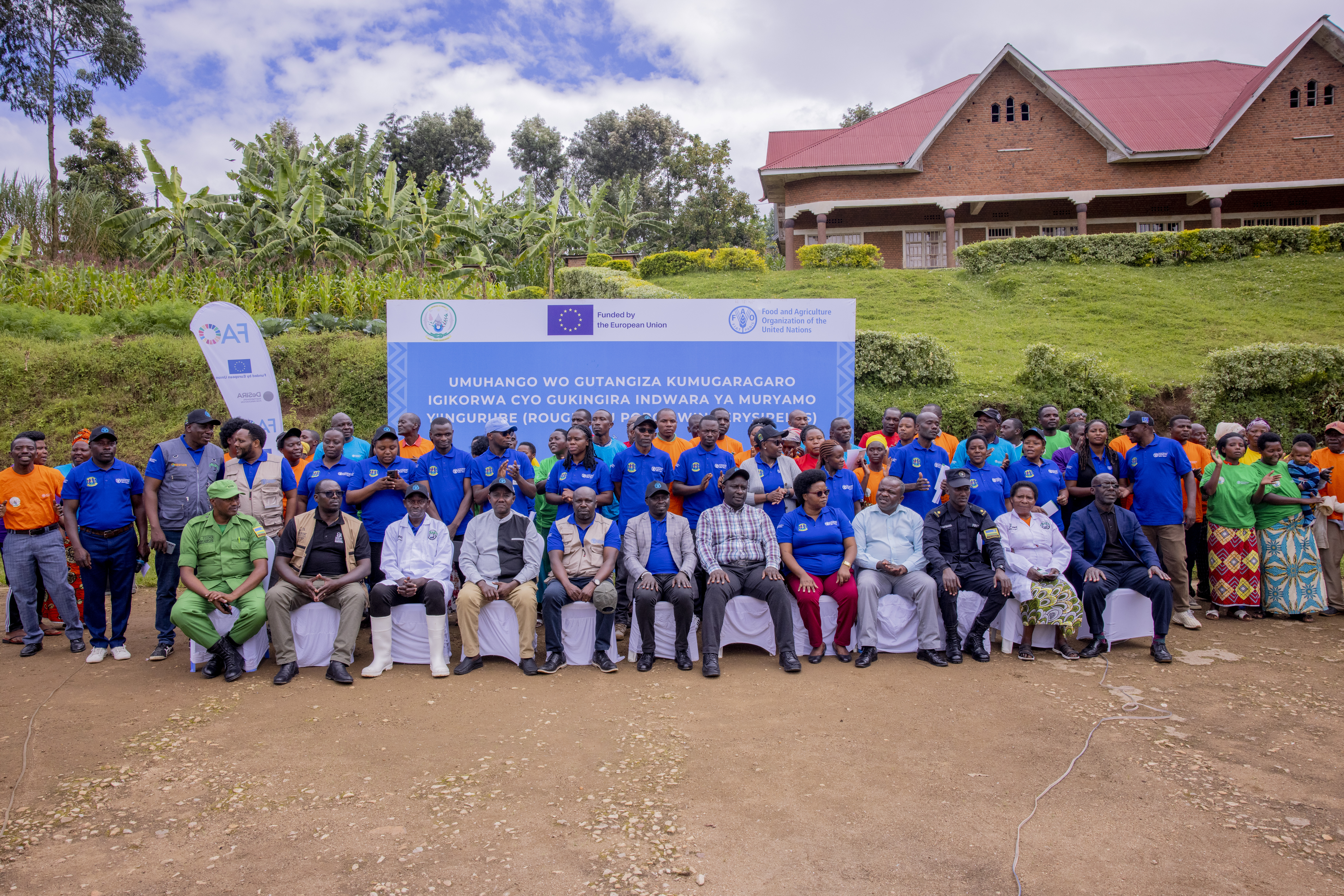
Rutsiro District, May 15, 2025 – The Rwanda Agriculture and Animal Resources Development Board (RAB), in partnership with the Food and Agriculture Organization of the United Nations (FAO), has launched a large-scale Swine Erysipelas vaccination campaign in Rutsiro District, in the Western Province. This emergency intervention aims to curb the recent outbreak of the disease, which has threatened piggery value chains and rural livelihoods in the region.
The vaccination campaign is part of a broader initiative under the DeSIRA project, funded by the European Union. Through this campaign, FAO has supplied 10,000 doses of Swine Erysipelas vaccines to protect pig populations and preserve the gains made under the project. The campaign aims to vaccinate 5,000 pigs in Rutsiro District, thereby reducing disease prevalence and mortality rates, while improving pig productivity and boosting farmers’ incomes.
“This campaign is not just about disease control—it’s about securing the livelihoods of smallholder pig farmers and building resilience in the piggery value chain,” said Thomas Ameny, a representative from FAO Rwanda at the event. The campaign supports the overarching objectives of the CDI-DeSIRA project, which include strengthening innovation partnerships, enhancing technical and functional capacities, and promoting the adoption of climate-smart agricultural practices.
In Rutsiro, the project’s interventions are concentrated on improving the piggery sector through innovative methods. These include genetic improvement using drone-assisted artificial insemination, the introduction of sustainable feed technologies such as hydroponic fodder and black soldier fly farming, and training sessions through Farmer Field Schools (FFS), which serve as platforms for knowledge sharing and practical learning.
Speaking at the launch, Dr. Fabrice Ndayisenga, Head of Animal Resources Research and Technology Transfer at RAB, underscored the importance of the campaign, noting that vaccinating pigs against Swine Erysipelas is vital for protecting animal health, boosting household incomes, and enhancing food security.
The vaccination campaign will adopt a participatory approach, involving veterinarians, local authorities, farmer cooperatives, and development partners. The rollout will feature community mobilization through radio programs and local meetings, refresher training for veterinary officers, strict cold chain management to ensure vaccine efficacy, structured field vaccination sessions, and real-time data collection and monitoring to track progress and impact.
In addition to controlling the current outbreak, the campaign aims to raise farmer awareness about disease prevention and biosecurity measures, strengthen veterinary services and stakeholder collaboration at the local level, and enhance overall pig health, meat quality, and market access. It also seeks to reduce veterinary costs and help farmers reinvest in their operations, thereby increasing their economic resilience. Overall, the initiative reinforces the broader goals of the DeSIRA project in promoting innovation and climate adaptation in agriculture.