KIIWP2–GALS Training in Kayonza Shows That Family Unity Is Key to Agricultural Progress
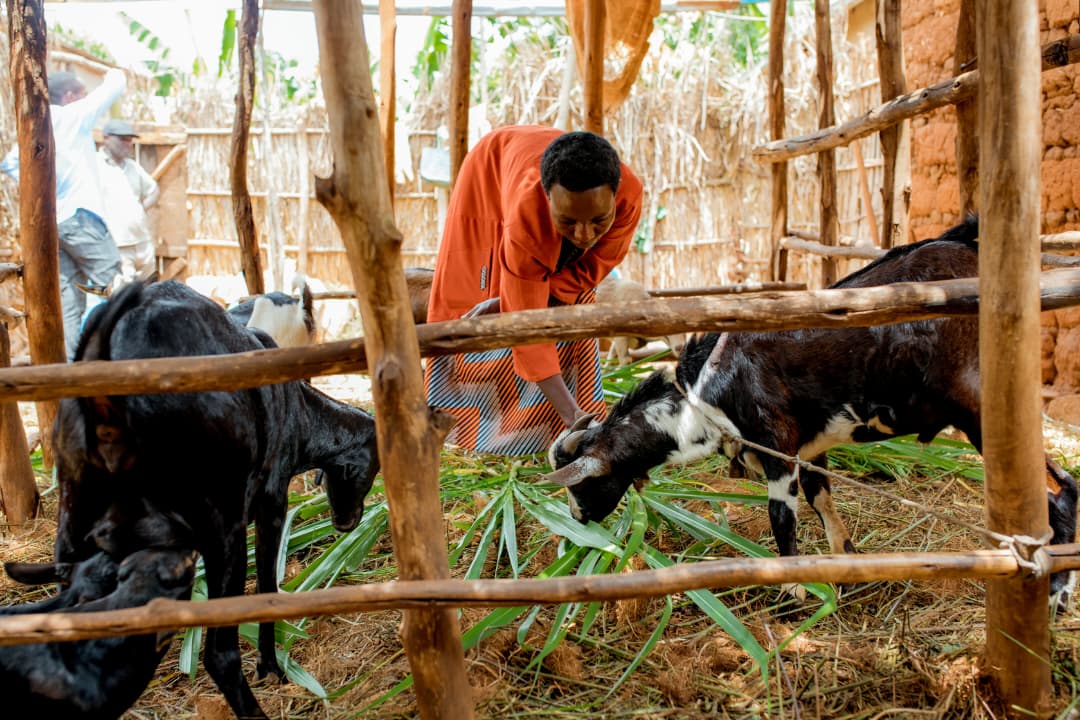
In Kayonza District, farming sustains most households, providing food, income, school fees, and access to health care. Over the years, farmers have received improved seeds, fertilizers, irrigation systems, and modern farming skills. Yet for some families, harvests remained low and progress was slow.
Through the Gender Action Learning System (GALS) under KIIWP2—an IFAD-funded project implemented by the Rwanda Agriculture and Animal Resources Development Board (RAB)—communities have now identified a hidden obstacle to agricultural development: family conflict.
GALS training revealed that disagreements within households, especially between spouses, were affecting how families planned, planted, harvested, stored, and sold their produce. Many farmers realized that without unity at home, even the best agricultural inputs could not deliver lasting results.
Unlike conventional agricultural training, GALS focuses on behavior change. Using simple drawings and guided discussions, families examine decision-making, roles, and power relations within the household. For many participants, this process was eye-opening.
Pascal Ntirimeninda, a farmer from Kayonza, says conflicts and poor communication once undermined both farming and family life in his home. Before attending GALS training, he made farming decisions alone and sold the harvest without consulting his wife.
“Because my wife was not involved, she felt farming was only my responsibility,” Pascal said. “I sold everything and did not even keep seeds for the next season. When planting time came, conflicts started again.”
This cycle, he explained, kept the family poor despite years of hard work. Everything changed after the GALS training. Through tools such as the Gender Balance Tree and the household visioning exercise, Pascal realized that a lack of cooperation was blocking their development.
“GALS helped me understand that farming is not an individual effort,” he said. “Today, we plan together, we harvest together, and we decide together.”
His wife, Odette Nyirahabimana, says the training also challenged her own assumptions. Before GALS, she believed it was normal for her husband to carry most household and farming responsibilities.
“I rested while he continued working, and I did not see it as a problem,” she said. “But drawing our Gender Balance Tree showed me how unbalanced our home was.”
That realization led to honest dialogue and shared goal-setting. Together, the couple agreed on common priorities, including expanding their land, paying school fees without stress, and building a decent family home.
“GALS brought peace back into our home,” Odette said. “Now we share work, decisions, and responsibility.”
Local leaders say this experience is common. Catherine Tunga, Kayonza District Coordinator of the National Women Council, notes that households affected by conflict are often the same ones facing poverty, malnutrition, and school dropouts. “Agriculture cannot thrive where families are divided,” she said.
GALS was introduced in Kayonza through KIIWP2, implemented by the Government of Rwanda in partnership with IFAD and overseen by RAB. What began with 1,200 participants has now reached over 20,000 people, with a target of 40,000 beneficiaries by 2028.
The lesson from Kayonza is clear: when families work together, agriculture grows—and so does hope.