Farming Without Ploughing: How RAB Is Shaping Conservation Agriculture
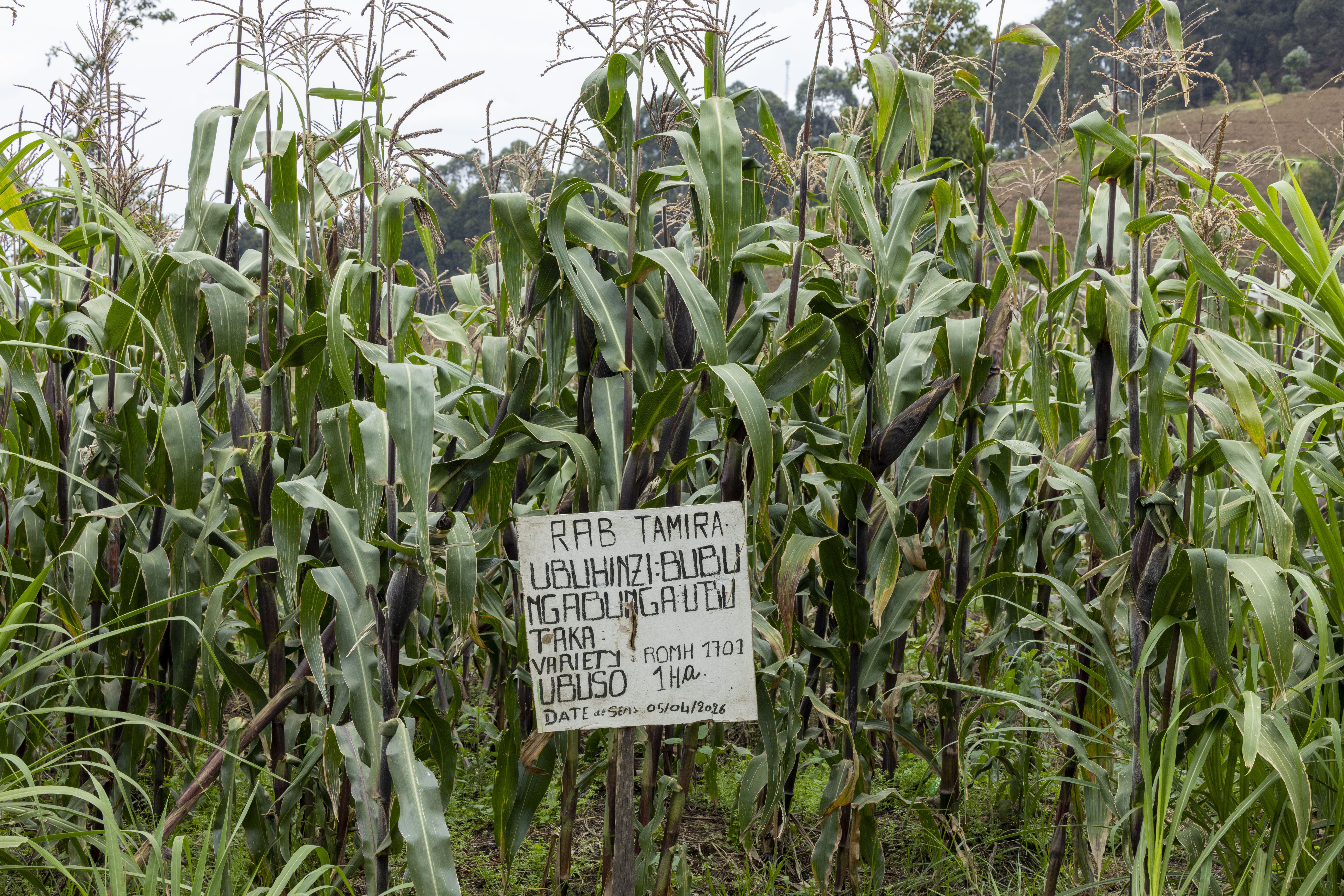
Rubavu District, Rwanda — In the fields of RAB’s Tamira Station in Bugeshi Sector, Rubavu District, a different approach to farming is taking shape.
The Rwanda Agriculture and Animal Resources Development Board (RAB) is piloting conservation agriculture, a method that minimises soil disturbance, maintains soil cover and protects the land from erosion. Instead of repeatedly turning the soil over before planting, farmers clear the land, leave the soil largely undisturbed and cover it with mulch or crop residues.
RAB has established demonstration plots at Tamira Station to allow farmers to observe the practice and learn how it can be adapted to their own fields.
Protecting the Soil
One of the key benefits of conservation agriculture is its potential to reduce soil erosion. Maintaining soil cover helps protect the land from heavy rainfall and surface runoff, which can wash away valuable topsoil.
Mulching also helps conserve soil moisture by reducing water loss, allowing moisture to remain available to crops for longer periods.
Lower Costs, Healthier Soils
The approach can also help reduce farming costs by limiting the need for repeated ploughing and intensive land preparation.
Over time, reduced soil disturbance and continuous soil cover can contribute to improved soil health and fertility, creating better conditions for sustainable crop production.
Farming for a Changing Climate
As farmers face increasingly unpredictable weather conditions, conservation agriculture is also being promoted as an approach that can contribute to climate-resilient farming systems.
For Leandre Rwakiyanga, Station Manager of RAB/Tamira Station, protecting the soil is central to securing future agricultural production.
“The message from Tamira is simple: protecting the soil is also an investment in future harvests,” he said.
Through its agricultural stations, RAB is bringing practical innovations closer to farming communities. In Rubavu, conservation agriculture offers farmers an alternative approach that places soil protection, efficient resource use and long-term productivity at the centre of farming.
The experience at Tamira demonstrates how changing one fundamental practice—how farmers prepare their land—can contribute to more sustainable, productive and resilient agriculture.