AVOCADO FARMING BECOMES A "MILKING CASH COW" FOR KAYONZA FARMERS WITH KIIWP SUPPORT
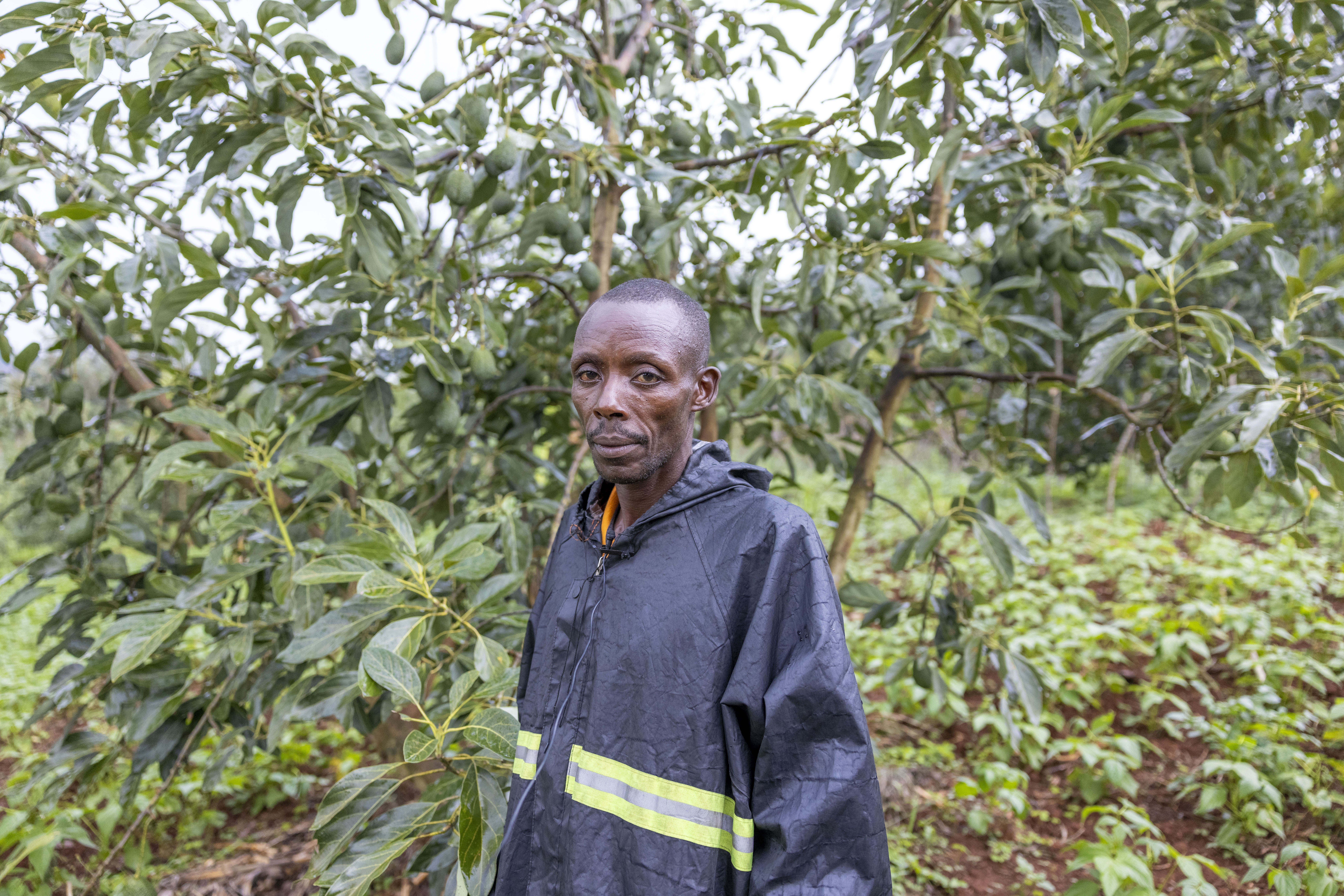
Through the support of the Kayonza Irrigation and Integrated Watershed Management Project (KIIWP), avocado farming has become a reliable and transformative source of income for farmers like Barajiginwa Théoneste. He is among the beneficiaries of the 1,150-hectare fruit orchard scheme established under KIIWP Phase I and strengthened through Phase II in Kabarondo and Murama, Kayonza District, along with a portion of Remera Sector in Ngoma District, implemented by the Rwanda Agriculture and Animal Resources Development Board (RAB) with funding from IFAD and the Government of Spain.
Kayonza District is one of Rwanda’s most drought-prone regions, where climate-induced shocks continue to affect the livelihoods of rural households. KIIWP was designed to respond to these challenges by improving access to water, restoring degraded catchments, and equipping farmers with the knowledge and tools needed to adopt climate-resilient agricultural practices. The project aims to sustainably improve food security, household incomes, and climate resilience for at least 40,000 rural families.
To achieve these goals, KIIWP focuses on several key outcomes, including expanding farmland under irrigation, promoting climate-smart agriculture, enhancing farmers’ capacity to manage natural resources, adopting productivity-boosting technologies, and strengthening market participation. To date, the project has reached over 31,000 households, providing training, Farmer Field Schools (FFS), and access to business development services within the larger horticultural zones developed under the project.
Reflecting on his success, Barajiginwa said: “In all the years I have been farming, I had never earned one and a half million francs except through avocado farming.” For him, transitioning to avocado cultivation—with the backing of water infrastructure, training, and better orchard management—has opened new economic opportunities, helping him meet household needs and achieve greater financial stability.
KIIWP is structured around three integrated components. The first strengthens resilience to droughts through catchment restoration, irrigation infrastructure development, and the promotion of climate-smart agriculture. The second supports farm business development by equipping farmers with skills in Farming-as-a-Business, strengthening cooperatives, enhancing market linkages, and providing access to the Matching Grant Facility. The third focuses on institutional development and project coordination, ensuring sustainable management and strengthening the capacity of local governments and implementing agencies.
Through these integrated interventions, KIIWP is steadily transforming rural livelihoods in Kayonza. For farmers like Barajiginwa, the project is not only enhancing climate resilience but also expanding opportunities to participate in profitable agricultural value chains, turning once-uncertain harvests into stable, dignified, and sustainable sources of income.